Introduction
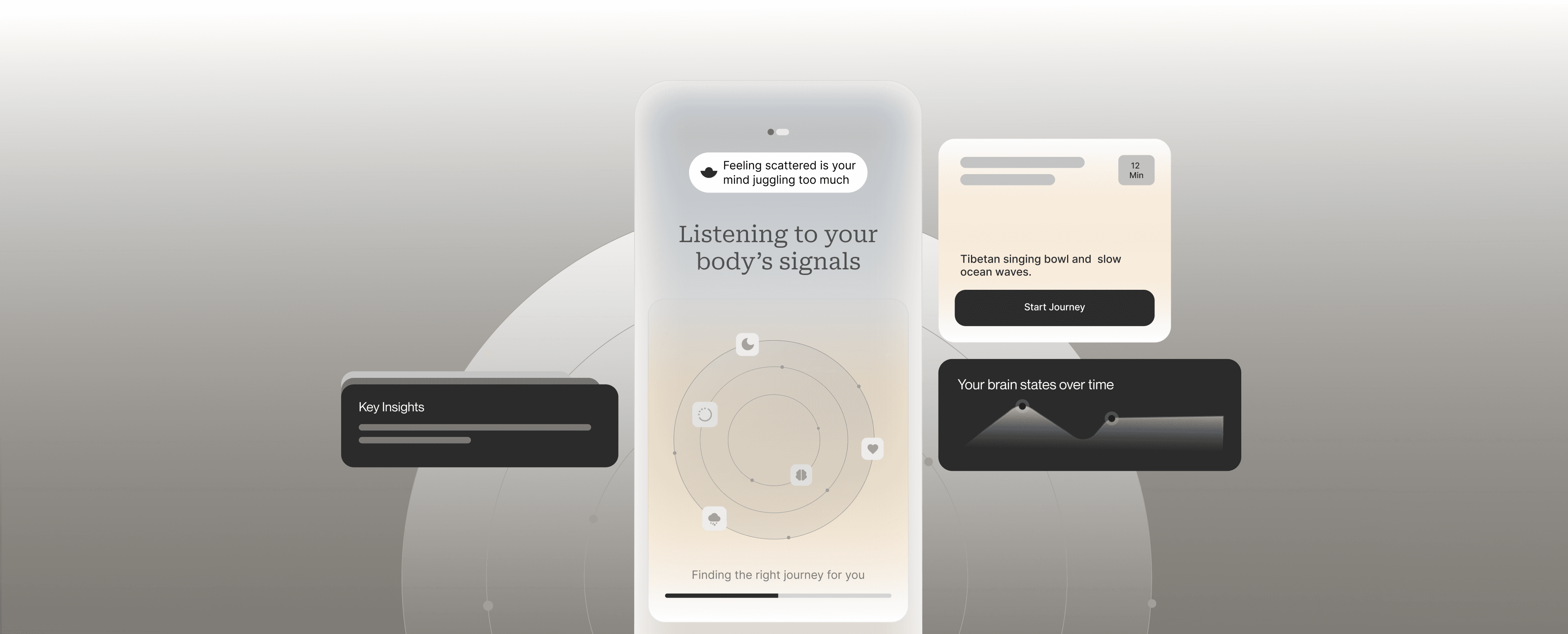
This is a speculative, AI-native product concept, focused on ethical use of bio-data, trust-building UX, and human–AI collaboration in a sensitive domain. The project explores how contextual intelligence and biometric signals can be used to reduce decision paralysis and help users begin their sessions with reduced effort without removing their sense of agency.
role
Product Designer
Vibe coding
AI Tools
Perplexity + Claude
UX Pilot
Filgma + Make
timeline
3 weeks
The Objective
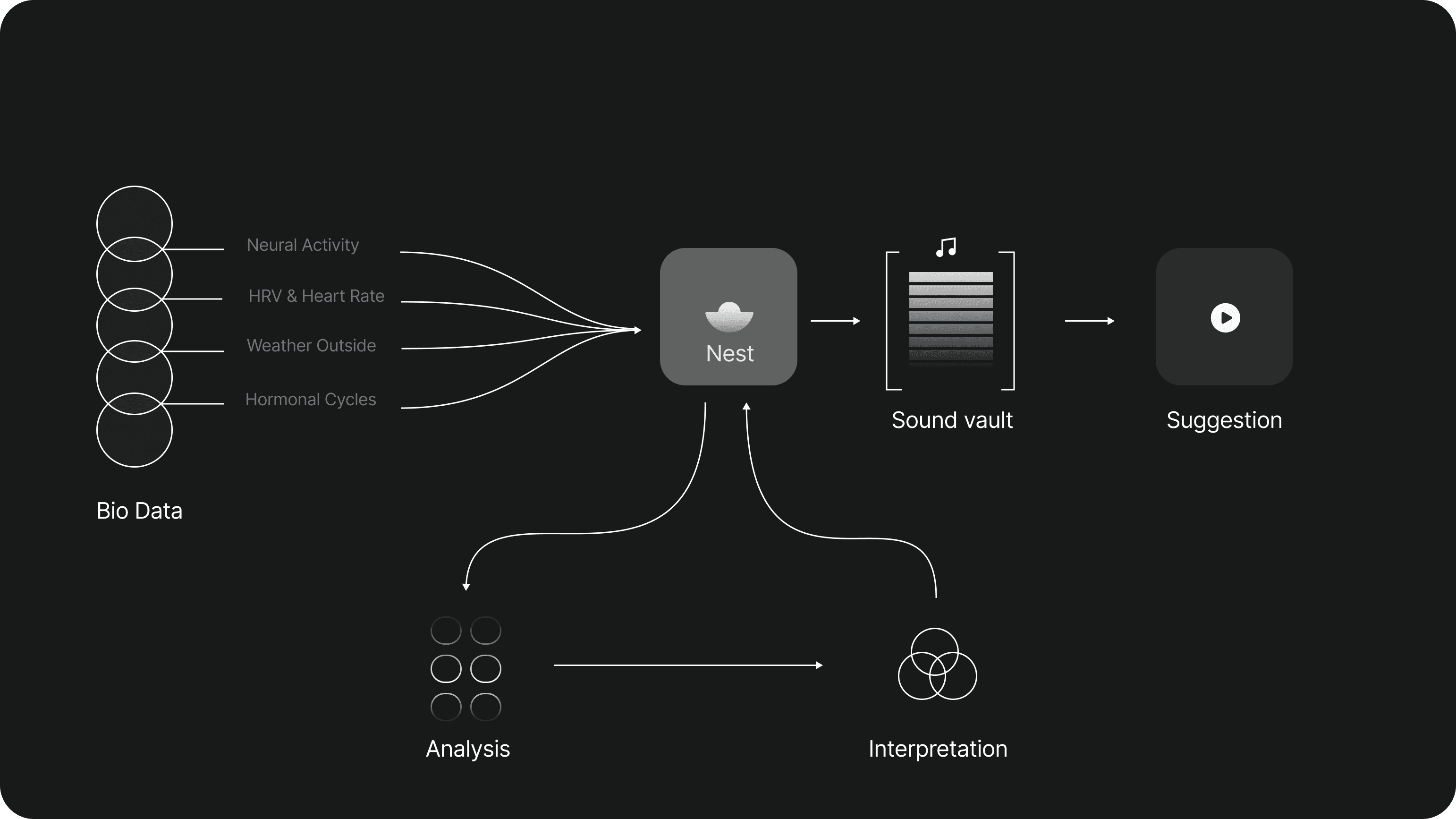
Reduction in decision paralysis through NeuroTone's smart suggestion engine. Helping users to start journeys faster based on biometric and contextual data.
The Problem Space
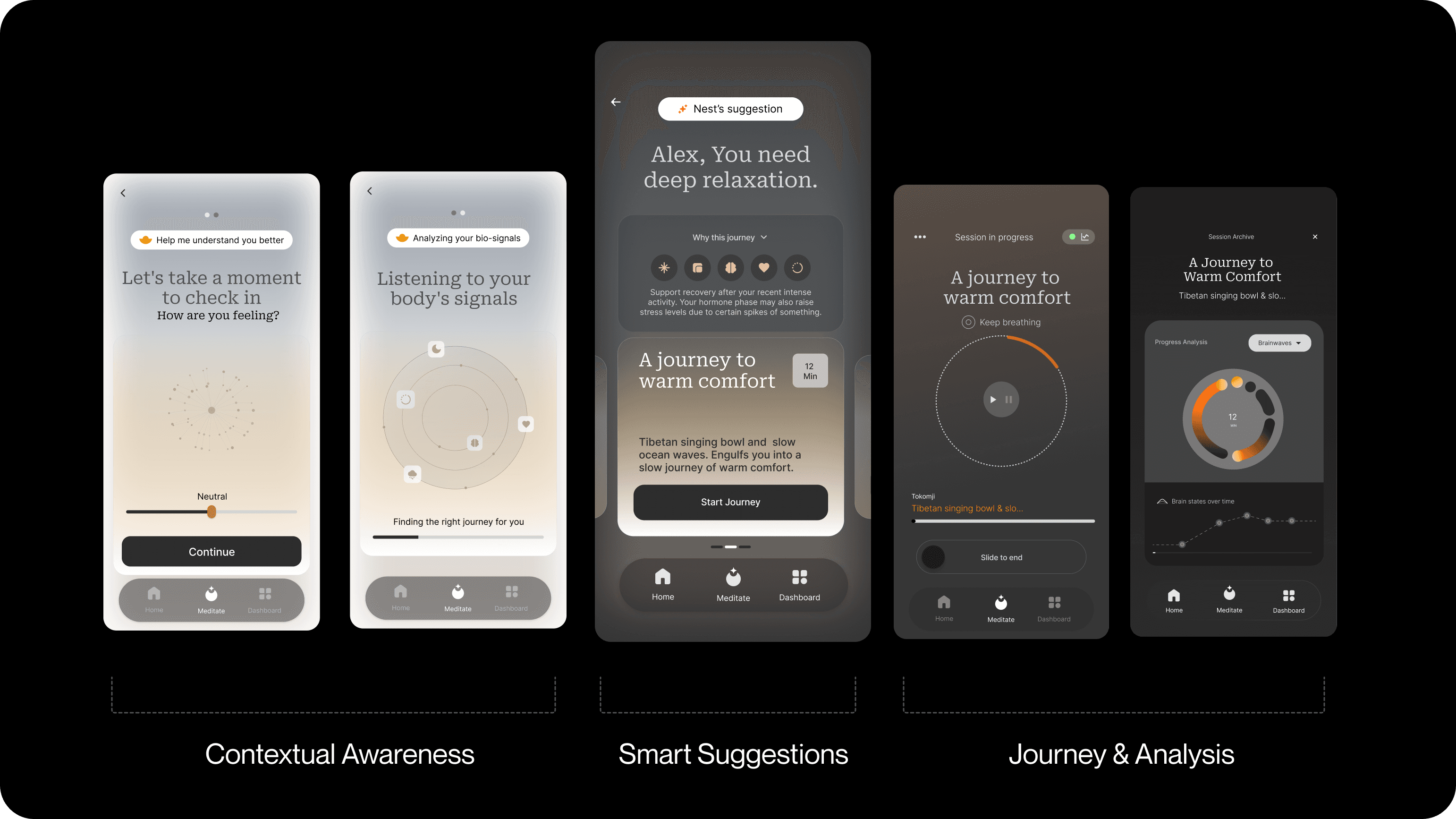
The health-tech app market is growing rapidly, led by apps like Headspace, Whoop & Endel but faces user pain points: lack of personalization, overwhelming content catalogue.
Opportunities explored for solutions (in collaboration with Claude & Perplexity)
1. Adaptive and emotionally intelligent content. 💚
2. Personalization layer to fine tune meditation 🧐
3. Strong and transparent privacy protections 💚
The Process
Discovery & Research Workflow

Problem Statement - The lack of personalization, overwhelming content catalogue leading to friction in habit building and decision paralysis.
Focus - Content personalization and integration of wearable tech for analysis and progress tracking.
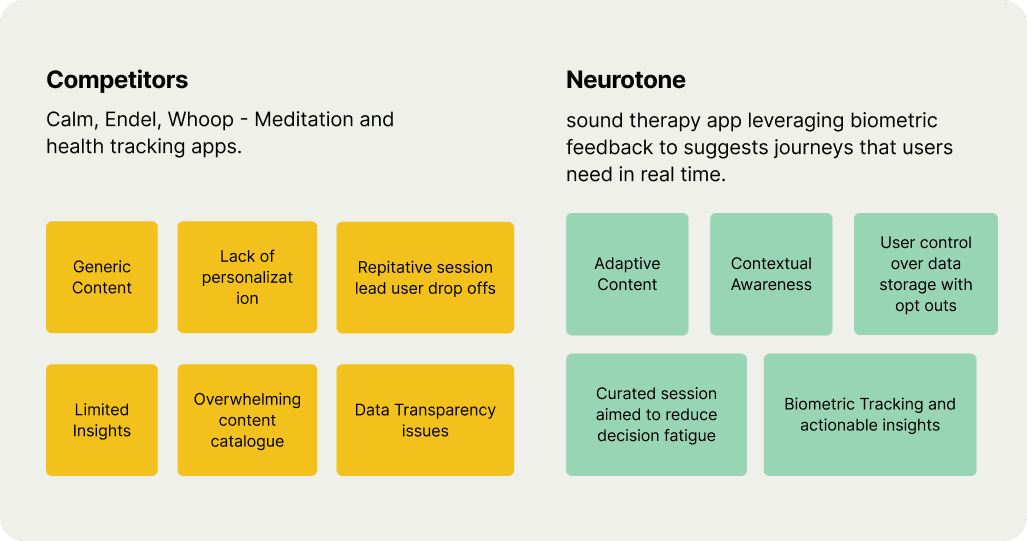
Persona Crafting
Partnering with LLMs, I refined the target audience. Followed by uncovering their key goals, pain points, and translated these insights into a persona.
The Suggestion Engine
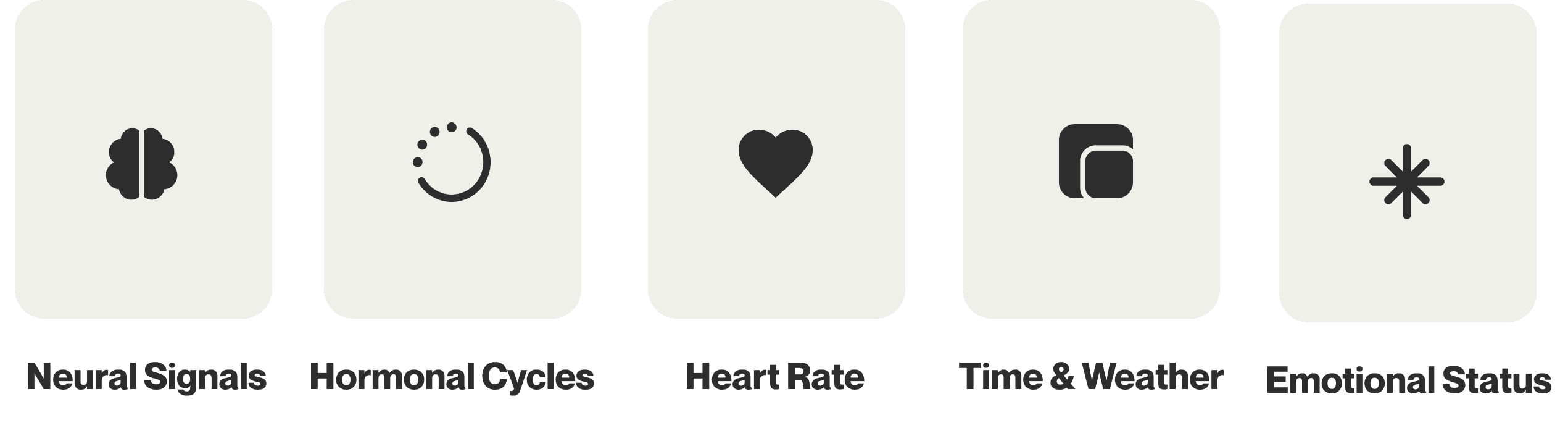
Through collaboration with LLMs and a data scientist, the product evolved into a context-aware predictive system that considers:
Design & Prototyping

Phase 1 : Through a lightweight product requirement document, I began to explored the concept and generated the first version of the user journey for the suggestion flow.
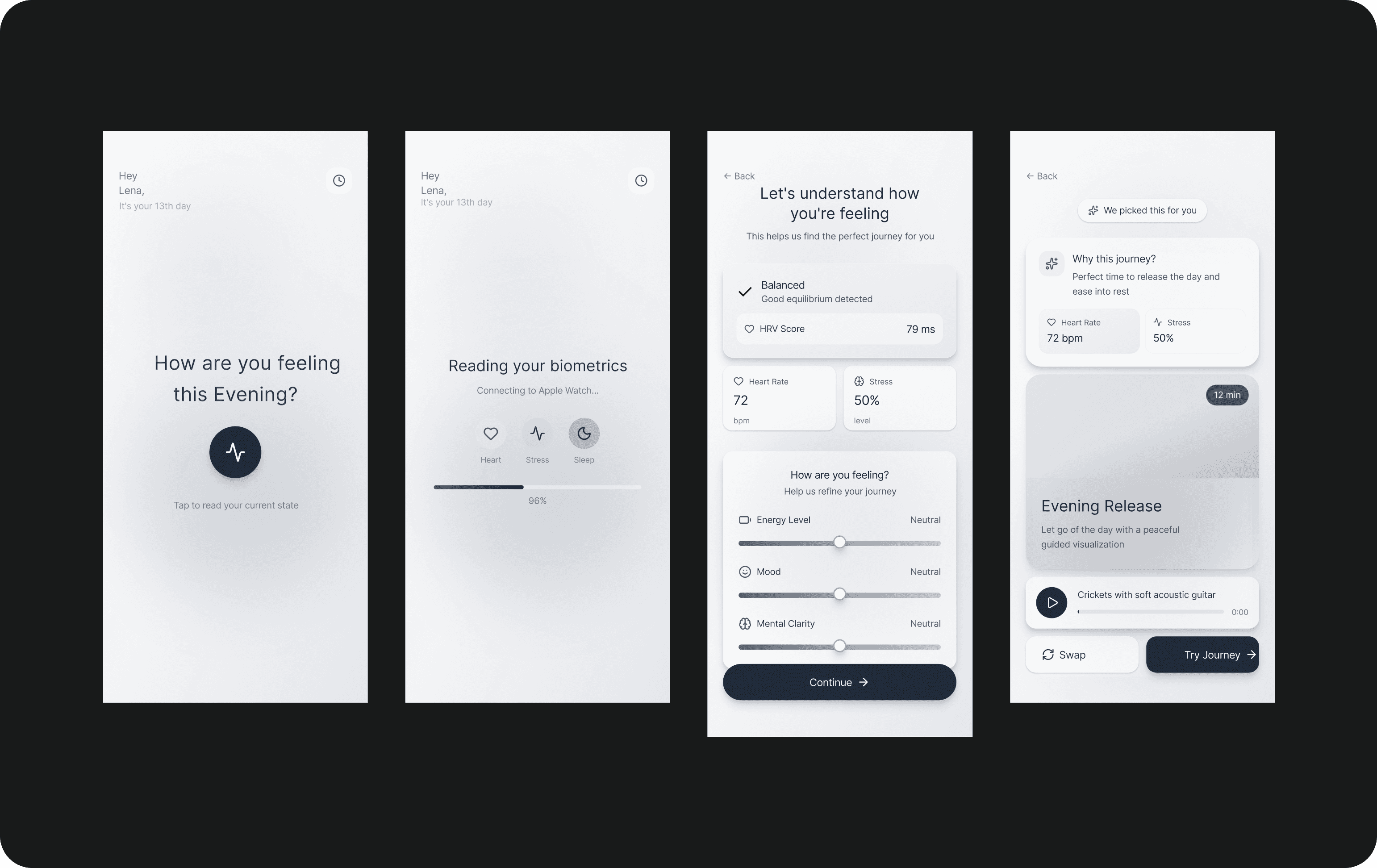
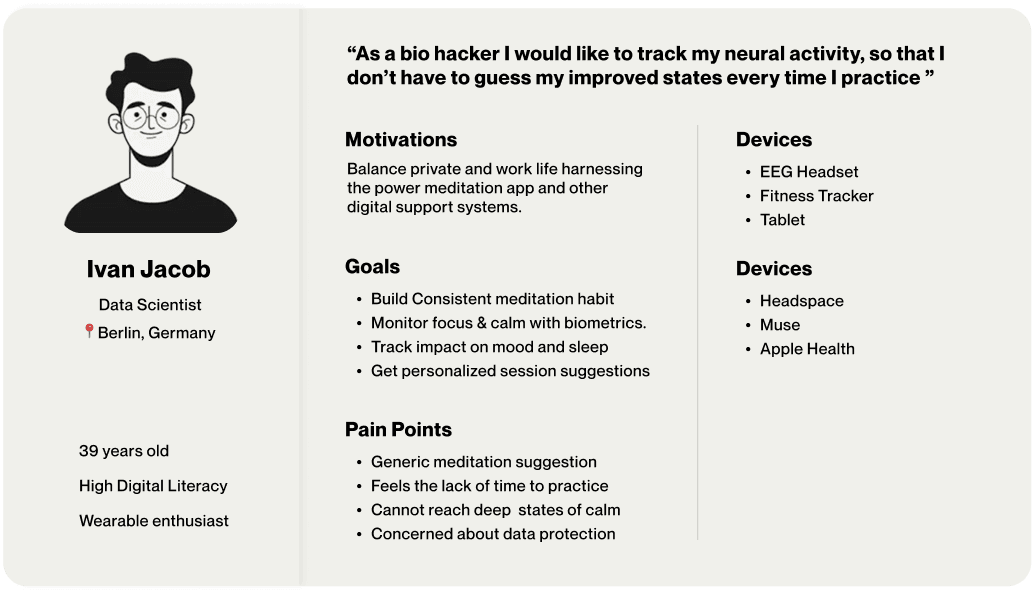
Phase 2 : After adjusting and validating the user flow I outlined the key screens: context awareness, smart suggestion, post session analysis. Utilised tools like Google Stitch for UI iteration and Figma Make to transform screen design into interactive prototypes.
Biometric Data Interpretation
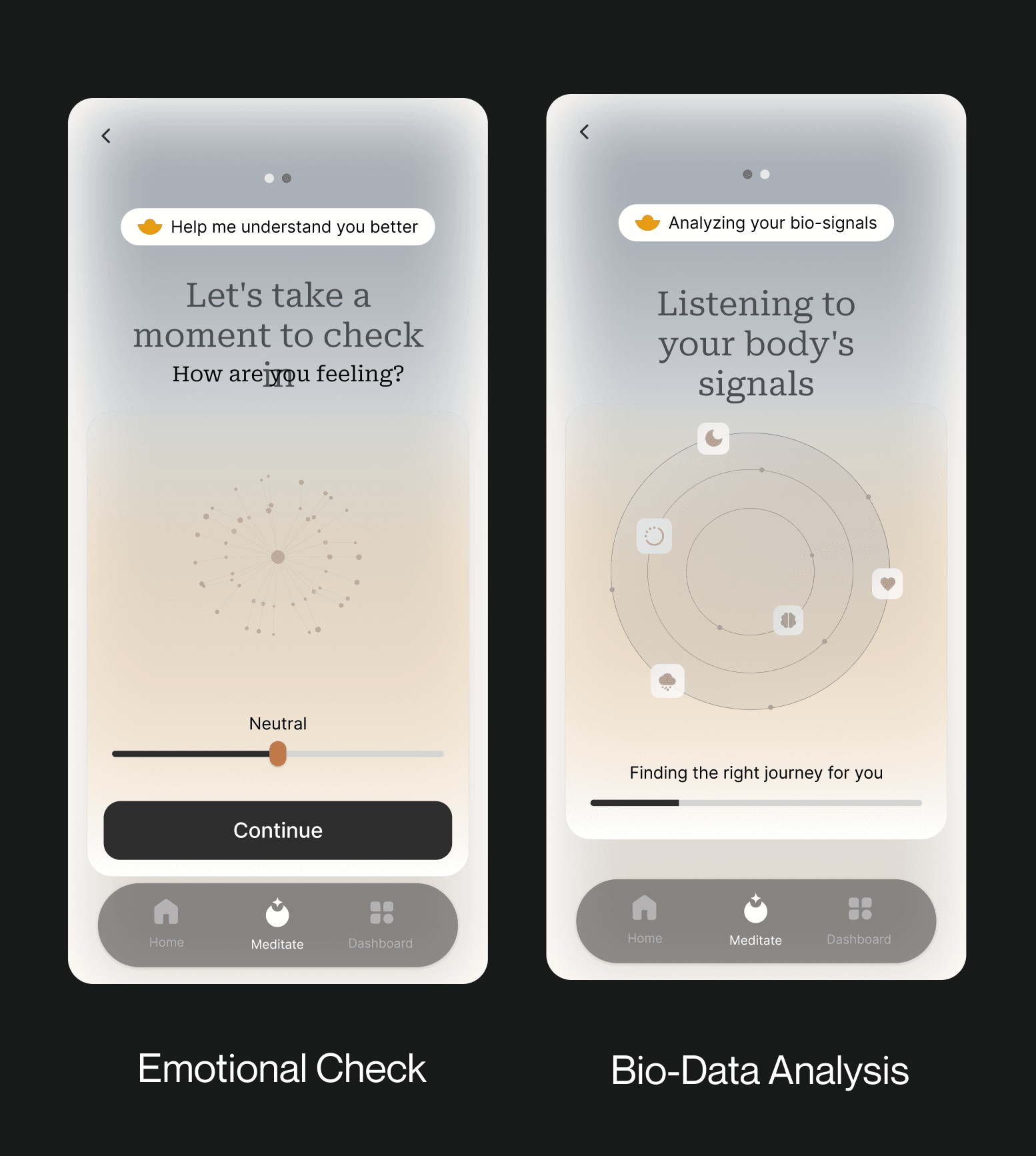
Although the system could in theory generate suggestions quickly, biometric analysis and wearable APIs introduce unavoidable latency. Leading to a soft check-in flow that runs in parallel to data collection and analysis.
Smart Suggestion and Tracking
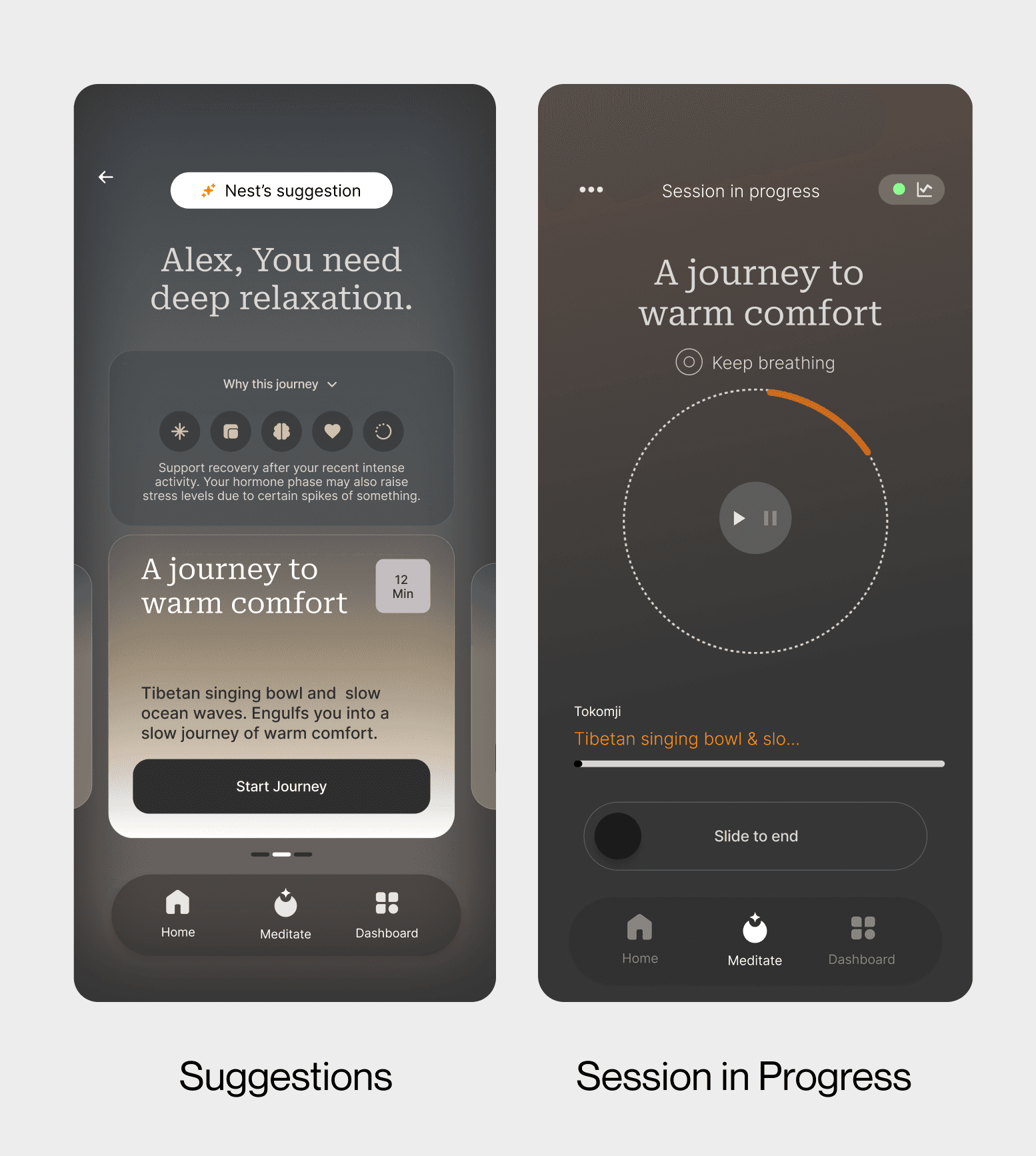
The smart suggestion screen provides the users with sound therapy options that are the best match for the user based on contextual data analysis.
The "why this journey?" module was designed to serve as a trust building layer and advocate for AI transparency.
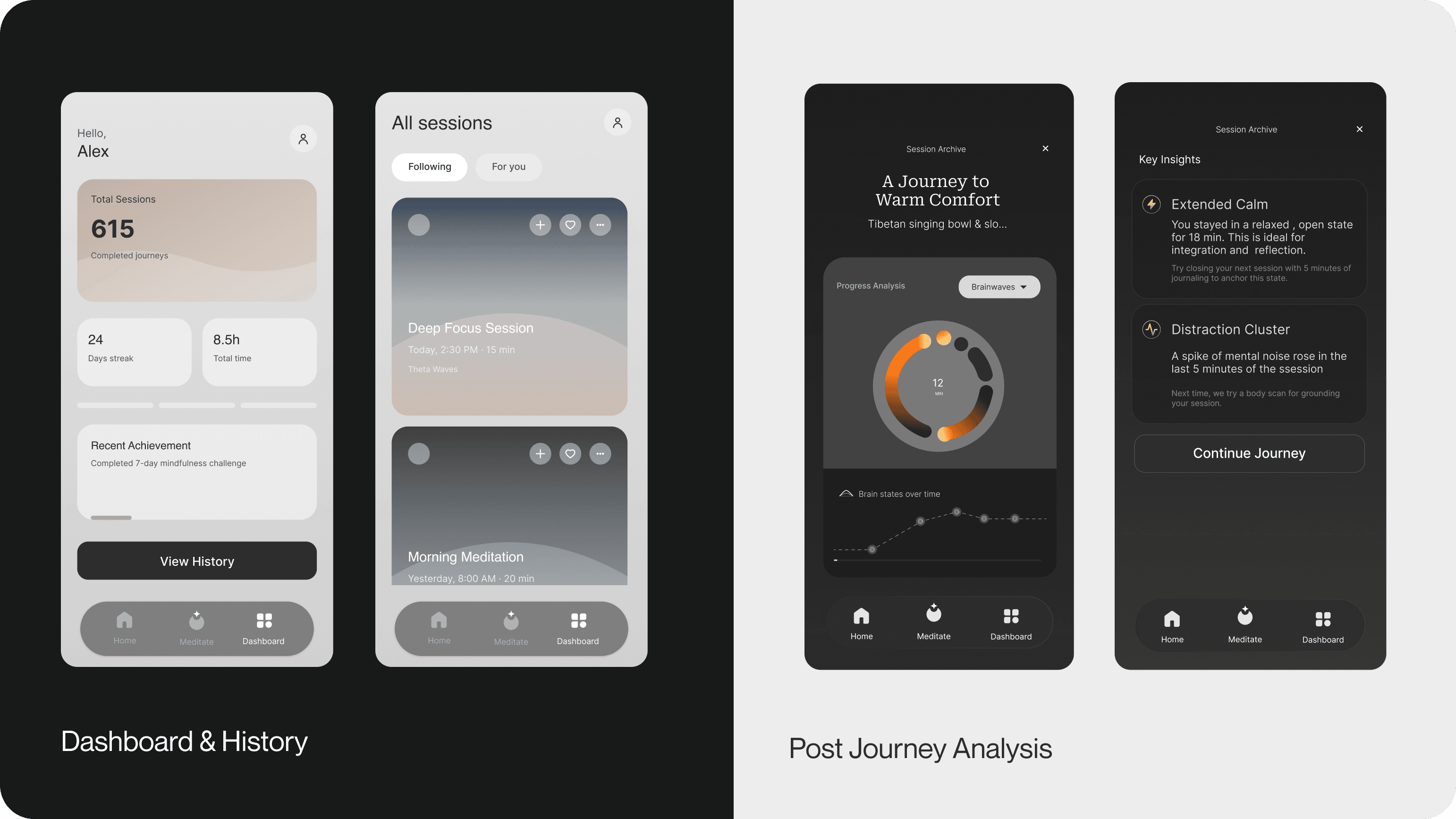
Dashboard & Post session analysis
After each session, the product reflects back patterns rather than judgments: - How the body responded - How context may have influenced the experience - How future suggestions may adapt
Insights & Reflections
Collaborating with the LLM for UX research and Idea generation was valuable because it brought diverse perspectives and speeded up decision-making. It was powerful to jumpstart an idea and lay out some level of foundation for rapid prototyping.
Next Steps after fully building the prototype
Run usability sessions with 5–8 regular meditation practitioners to observe:
How they move through the flow
how clearly they understand the biometric feedback.
Metrics to study with 5–8 participants
Task success rate
Error and hesitation rate
Time on key tasks